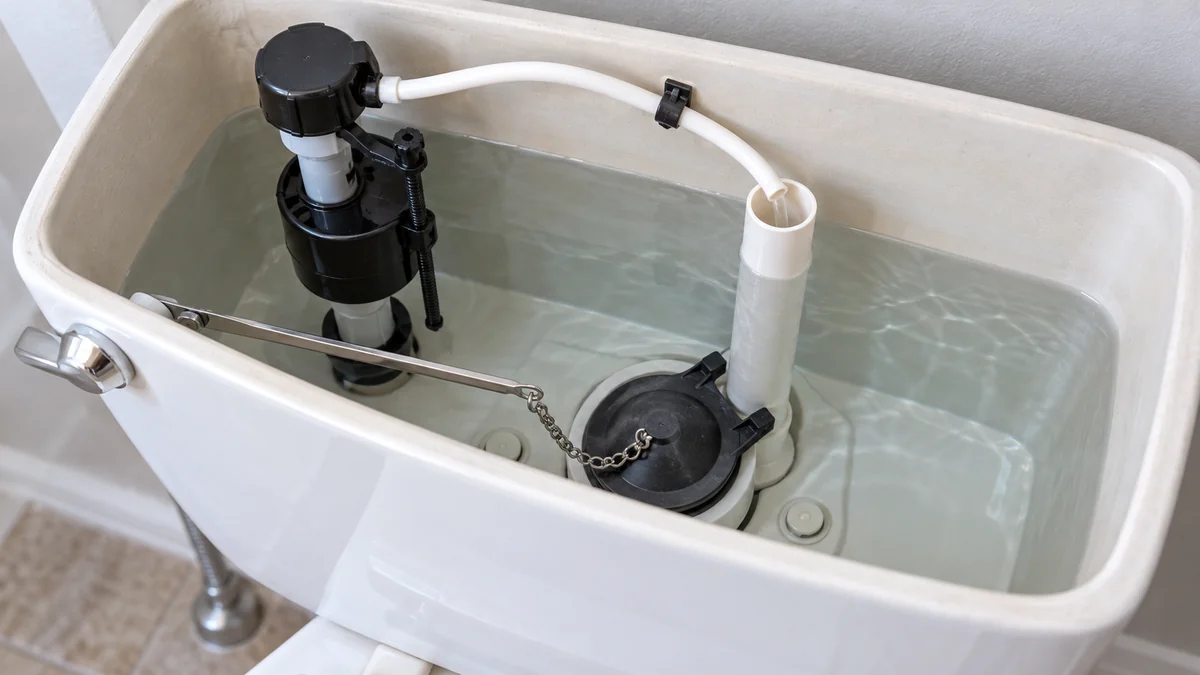
Toilet phantom flushing after replacing flapper means the tank is still losing water or sending it into the overflow path.
Do not buy a second flapper yet.
Mark the full tank waterline, shut off the supply, and wait 30 minutes; where the level stops tells you more than the refill sound does.
The home installation guide shows how to write down a model number before you shop for a part. The smart-home troubleshooting map works the same way here: split the supply, the control, and the leak into separate checks instead of replacing the loudest component.
Toilet phantom flushing after replacing flapper? Let the level fall
The fill valve is usually reacting, not causing the mystery.
Water escapes slowly, the float drops, and the valve opens long enough to restore the lost level.
Start after a normal flush, once the fill valve has stopped. Use a pencil or a small piece of painter’s tape to mark the tank waterline, then close the toilet’s supply valve without flushing again.
- Wait at least 25 to 30 minutes without touching the handle.
- Compare the water with your mark and note where it settles.
- Leave the supply off longer if the level is still moving.
Korky’s manufacturer test uses the same pencil mark and says the stopping level can separate a flapper or seal leak from a flush-valve problem.
Treat that stopping point as the place to look next, not permission to force or remove tank hardware.
“Replaced my toilet flapper and my toilet is still ghost flushing.” — a homeowner’s symptom report
That failed first repair is evidence, not wasted money. It makes fit, chain position, the sealing surface, and the refill route more likely places to check than another blind flapper purchase.
Time two refill cycles before changing anything else. If the interval became much longer after the new flapper but did not disappear, the part probably reduced the leak without sealing the opening completely; recheck model fit, chain position, and the seat before moving to the fill valve.
If the interval did not change and water is visibly crossing into the overflow tube, treat the new flapper as unrelated to that path. A high fill setting can coexist with a good tank seal.
A refill every 15 to 30 minutes points at the hose
Look at the small refill hose that runs from the fill valve to the overflow tube. Its outlet belongs at the top in the model’s clip or port, not submerged below the tank waterline.
Kohler documents an uncommon siphon when that hose end sits below the waterline.
The company describes a leak as slow as one drop every three seconds, enough to make the fill valve run every 15 to 30 minutes.
That timing matters. If your toilet wakes up on roughly that schedule and the hose outlet is submerged, restore the approved clip position before blaming the new flapper.
Do not leave the hose spraying loose into the tank. Use the toilet maker’s diagram because canister and traditional flapper assemblies route the hose differently.
Match what you see to one next move
Run one observation at a time.
Changing the float, chain, hose, and seal together destroys the clue that tells you which change worked.
| Observation | What it points to | Next move |
|---|---|---|
| Water enters the top of the overflow tube | Water level or fill valve | Set the level to the maker’s mark; replace the fill valve only if it will not shut off there |
| Hose outlet is below the tank waterline and refills recur in 15–30 minutes | Refill-hose siphon | Fit the correct clip or reconnect the model’s port, then retest |
| Supply-off level falls toward the flapper or canister seal | Seal fit, chain, or sealing surface | Confirm the exact seal, remove loose debris, and center the chain |
| Level falls to a point on the overflow tube or near the tank bottom | Flush-valve body or gasket | Stop buying flappers; identify the flush valve and decide whether tank removal belongs with a plumber |
The fill valve itself can be faulty, but periodic refilling with the supply on proves only that water was lost. If the marked level stays put with the supply off, watch the fill cycle for water spilling into the overflow before replacing the valve.
The new flapper can still be the wrong seal
“New” is not the same as model-matched. Toilets use different flush-opening sizes, and tower or canister valves use shaped seals rather than a standard hinged flapper.
Photograph the model number inside the tank and the old part before visiting a store. Match the toilet model, flush-valve style, opening size, and seal shape instead of relying on a package that says universal.
Then inspect the chain with the handle at rest. Kohler’s troubleshooting guidance calls for roughly one or two links of slack on the designs it covers; a taut chain can hold the seal open, while a loose chain can get trapped under it.
Wipe removable debris from the sealing surface with the water off. A nick, crack, heavy mineral ridge, or warped flush-valve seat is not something a softer flapper can reliably correct.
Avoid drop-in tank cleaners containing bleach or chlorine unless the toilet maker permits them. Fluidmaster’s instructions warn that these products can damage tank components and also place the refill tube above the tank waterline.
Call before the tank has to come off
Adjustment ends when the repair requires loosening the tank, replacing the full flush-valve body, or working around cracked porcelain. Those jobs can turn a hidden tank-to-bowl leak into water on the floor.
Call a plumber sooner if the shutoff valve will not close, the tank rocks, water appears outside the toilet, the porcelain is cracked, or the marked level falls below the flush-valve opening. Keep the supply closed while an exterior leak is active.
Do the pencil-line test before tonight’s next refill. For toilet phantom flushing after replacing flapper, that 30-minute result is the cheapest way to decide whether to reposition a hose, correct the seal fit, buy one model-matched valve part, or stop before tank removal.

Bolt & Bulb covers what goes wrong after the unboxing: devices that drop off Wi-Fi, dimmers that flicker with LED bulbs, locks that will not fit a rental door. The site draws on manufacturer documentation, platform support pages and release notes, and attributed owner reports in public forums.