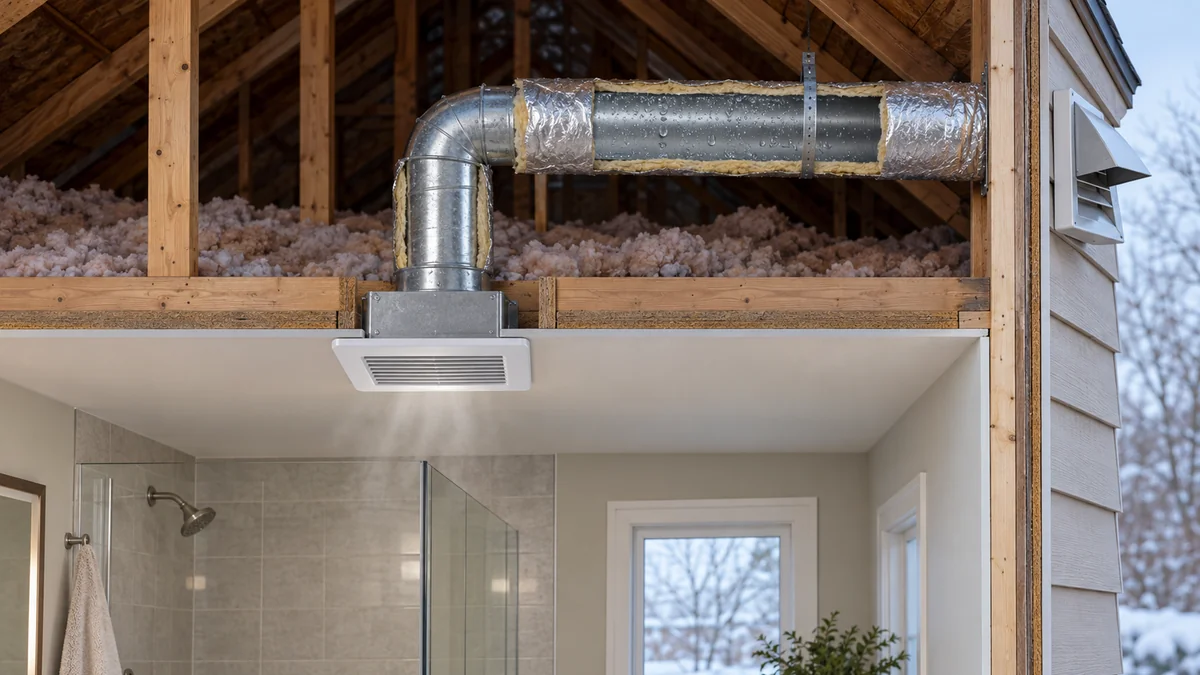
Bathroom fan condensation trap is not a universal fix for water dripping from an exhaust fan.
Use one only when a vertical duct and the product instructions call for controlled drainage, and only when the outlet can drain somewhere safe.
For a horizontal run to a wall or soffit, an insulated duct with a steady fall toward the exterior is usually the first correction.
If water has reached the fan’s electrical housing, stop using it and call an electrician or ventilation contractor.
Bathroom fan condensation trap starts with duct direction
Warm shower air can cool enough to form water inside a duct that crosses a cold attic. The drops follow gravity, so the route matters more than the word “condensation” on a product listing.
A horizontal run should have no belly where water can collect. Support and insulate it through cold space, then give it a slight fall toward the outdoor vent.
The US Bonneville Power Administration’s home weatherization guide says bath exhaust must reach outdoors through an insulated duct. It also calls for the duct to slope down and away from the fan whenever possible.
That guidance turns a wet horizontal run into a routing problem first. A trap installed above a flat or sagging duct leaves the original reservoir in place.
A vertical rise is different because gravity brings condensate back toward the fan. Ireland’s Sustainable Energy Authority domestic technical specification calls for a condensate trap on vertical ducting, while horizontal ducting should fall slightly away from the fan.
That is a useful layout rule, not permission to improvise a drain. Local code, the fan manual, and the trap maker still control the installation where you live.
Match the route to the first correction
Use the table only after you can see where the duct ends. A hose disappearing into attic insulation is not enough information.
| Route you can confirm | First correction to assess | Trap decision |
|---|---|---|
| Horizontal to a gable or sidewall | Remove sags, insulate the full cold-space run, and maintain a fall toward the exterior | Usually not first; check the exact fan and local rules |
| Short rise, then horizontal to a wall | Keep the rise short and give the remaining run a continuous outward fall | Only if the approved design provides drainage |
| Mostly vertical to a roof cap | Verify insulation, cap condition, and the manufacturer-approved condensate path | Often relevant, but it must drain safely |
| Route or termination unknown | Trace it before buying parts | Do not guess |
Panasonic’s cold-weather fan guide treats vertical and horizontal routes differently.
It also points to cold-air backflow, on-and-off use, duct size, dampers, and outdoor temperature as causes.
The practical meaning is simple. A plastic fitting cannot compensate for poor airflow, missing insulation, or a cap that admits wind-driven rain.
Check the easy evidence before anyone opens the ceiling.
Note whether dripping follows a shower on a cold day, a rainstorm with the fan off, or both.
Shower-linked dripping supports a condensation diagnosis. Rain-linked water, staining around a roof penetration, or dampness with no fan use points toward the cap, flashing, or another leak.
A trap without a drain is another low spot
A real condensate trap needs a matching duct connection and a continuous drain path to an approved location.
If the listing shows a drain spigot but your plan ends with a capped tube in the attic, you have made storage, not drainage.
Do not route captured water onto attic insulation, ceiling drywall, a soffit cavity, or the roof surface.
Do not let a drain line cross a freezing space without a design approved for that climate.
This is where a cheap part can become an expensive ceiling repair.
The trap also adds joints and may slow airflow.
Confirm the fitting matches the duct size and the fan maker’s allowed layout rather than forcing a reducer onto the fan collar.
Keep the exhaust separate from plumbing vents, dryer ducts, and the attic itself. Bathroom moisture belongs outdoors through its own termination.
If the route needs roof work, a new drain connection, or changes beside wet electrical equipment, hand the photos to a qualified ventilation contractor. Use an electrician when water has entered the powered fan or wiring area.
The water mark can rule out the trap
Look at the pattern without removing covers. Drops centered below the grille after showers suggest water returning through the fan path, while a spreading ceiling stain can indicate a leaking duct joint, roof penetration, or unrelated plumbing above.
A bathroom that stays steamy is another clue.
Hold one sheet of toilet tissue near the grille while the fan runs. If it will not stay there, record the weak draw for the contractor rather than assuming a drain will solve it.
Do not use smoke, flame, or a hand inside the grille to test airflow.
Also inspect the outdoor cap from the ground.
A stuck flap, blocked screen, or clear damage changes the repair. Climbing onto a roof is not part of this check.
Send four photos instead of buying one part
Take a clear photo of the fan model label if it is visible without opening a wet housing.
Then photograph the first duct section, the full route you can reach, and the outside vent from a safe location.
Add three notes: when the drip appears, whether the fan clears mirror fog, and whether rain triggers water while the fan is off.
That gives a contractor enough context to price the right visit.
The home installation guide helps you record wall and ceiling conditions before anyone cuts an access opening. If the fan is automated, the smart-home troubleshooting map keeps a control failure separate from the physical moisture problem.
Do not start with a shopping cart.
Start by tracing the route. Buy a bathroom fan condensation trap only after the duct direction, approved drain destination, and exact fan instructions all support it.

Bolt & Bulb covers what goes wrong after the unboxing: devices that drop off Wi-Fi, dimmers that flicker with LED bulbs, locks that will not fit a rental door. The site draws on manufacturer documentation, platform support pages and release notes, and attributed owner reports in public forums.